
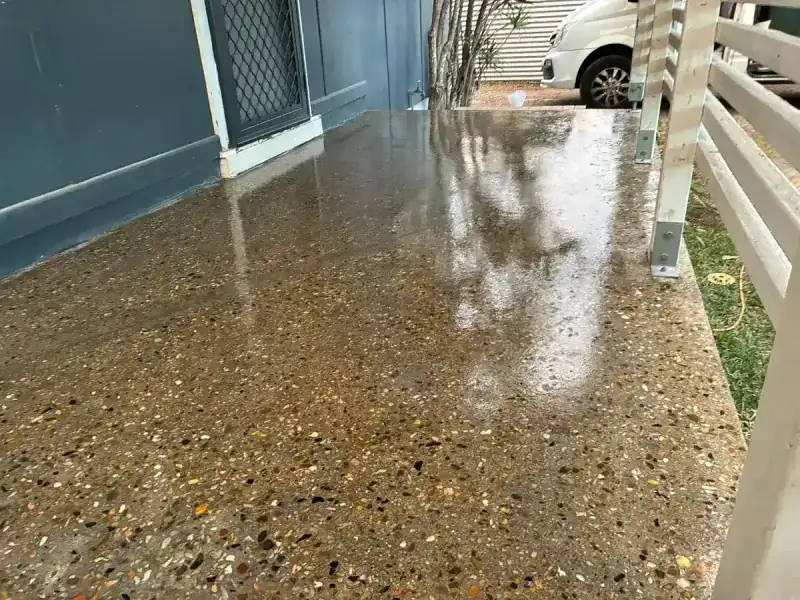
Unsealed concrete is porous, which is the root of most outdoor concrete complaints. Oil soaks in rather than sitting on top. Leaf litter leaves tannin stains. Shaded sections grow mould. Queensland adds intense UV and heavy summer rain cycles on top of all that.
Sealing solves it, but the three sealer families behave so differently that choosing the wrong one is worse than choosing nothing.
Penetrating sealers
Silane and siloxane sealers soak into the surface and react chemically inside the pores, leaving no film on top. Appearance barely changes, which is exactly what you want on exposed aggregate or natural stone where the point is the material itself.
Because there is no surface film, there is nothing to peel, scuff or wear through in traffic areas, and no change to slip resistance. They are the most durable option and the least visible. They typically last several years before reapplication, and they will not give you gloss if gloss is what you are after.
Acrylic sealers
Acrylics sit on the surface as a film. They deepen colour, add sheen, and can produce the wet-look finish people often want on aggregate driveways and pool surrounds.
The trade-offs are real. Films wear where traffic concentrates, so you see traffic patterns over time. They need recoating on a shorter cycle. Applied too thickly or over a damp slab they can trap moisture and go cloudy. On smooth concrete a gloss acrylic is slippery when wet, so an anti-slip additive is worth including for pool areas, ramps and steps.
Polyurethane sealers
Polyurethanes are the hardest wearing of the three, with strong chemical and abrasion resistance. They suit commercial floors, workshops and areas that see cleaning chemicals or constant traffic. They cost more, and application is less forgiving of surface contamination and moisture.
Preparation decides the outcome
Whichever product you choose, sealing over a dirty slab locks the dirt in permanently. Preparation means pressure cleaning, degreasing where oil is present, filling cracks and joints where required, and letting the slab dry properly first. Sealing a slab that has not dried is one of the most common causes of a cloudy, patchy finish.
How to decide quickly
- Exposed aggregate or stone you want to look natural: penetrating silane.
- Driveway or patio where you want richer colour and gloss: acrylic, with an anti-slip additive if it gets wet.
- Commercial floor, workshop or chemical exposure: polyurethane.
- Pool surround or ramp: penetrating, or acrylic with anti-slip. Never a bare gloss film.
If you are unsure, the deciding question is usually whether you want the concrete to look sealed or not. Penetrating sealers are invisible; acrylics are a deliberate aesthetic choice with a maintenance cycle attached.