
How We Work: Step-by-Step Trade Process
Explore our clear 6-step trade workflow. From initial site protection and motorized tile stripping to planetary concrete grinding, HEPA dust extraction, and final handover.
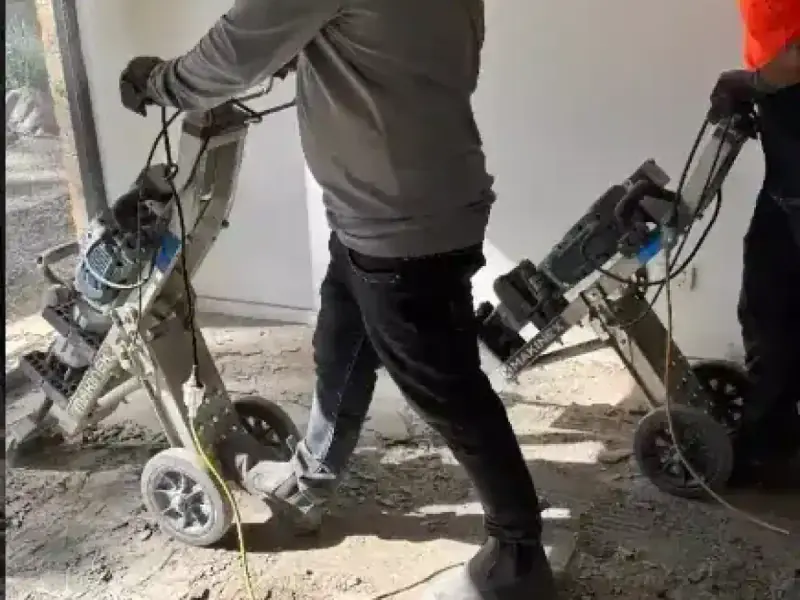
Pre-Job Containment
Site Protection & Masking
Before starting demolition or grinding, we mask walls, joinery, kitchen cabinets, and HVAC vents with protective plastic sheeting to contain dust completely.
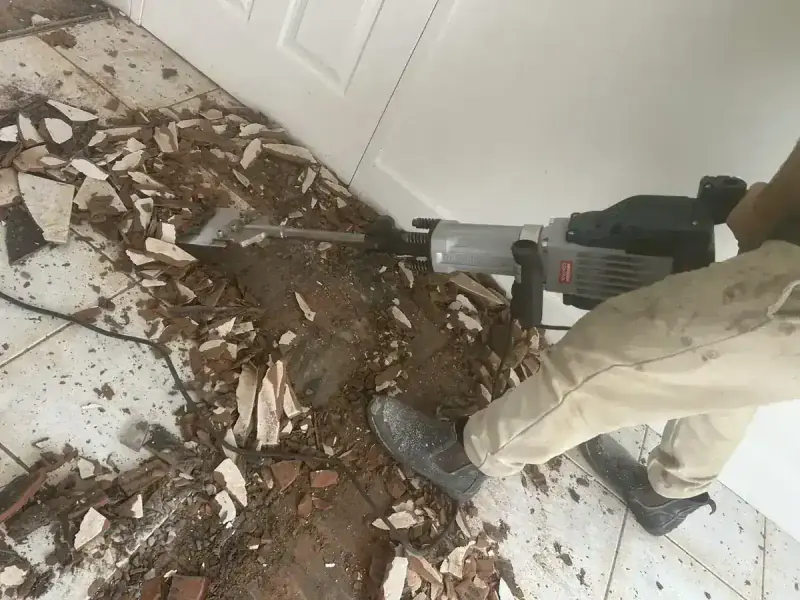
Subfloor Stripping
Tile Demolition & Scraping
Self-propelled tile strippers slide under ceramic, terracotta, or slate tiles, popping them off clean without gouging the concrete slab underneath.
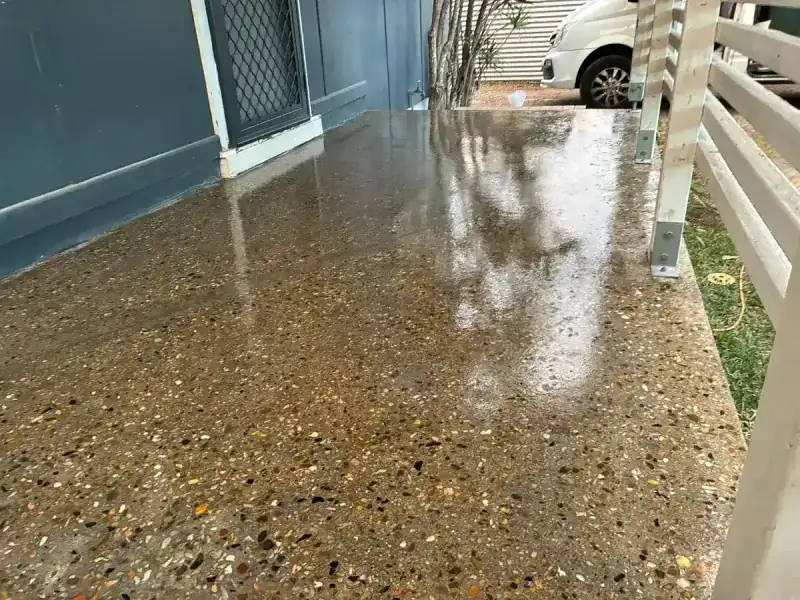
Slab Preparation
Planetary Grinding & HEPA Extraction
Counter-rotating diamond grinding discs flatten high spots, strip old glue, and open concrete pores while H13 HEPA vacuums extract 99% of silica dust at the cutter head.
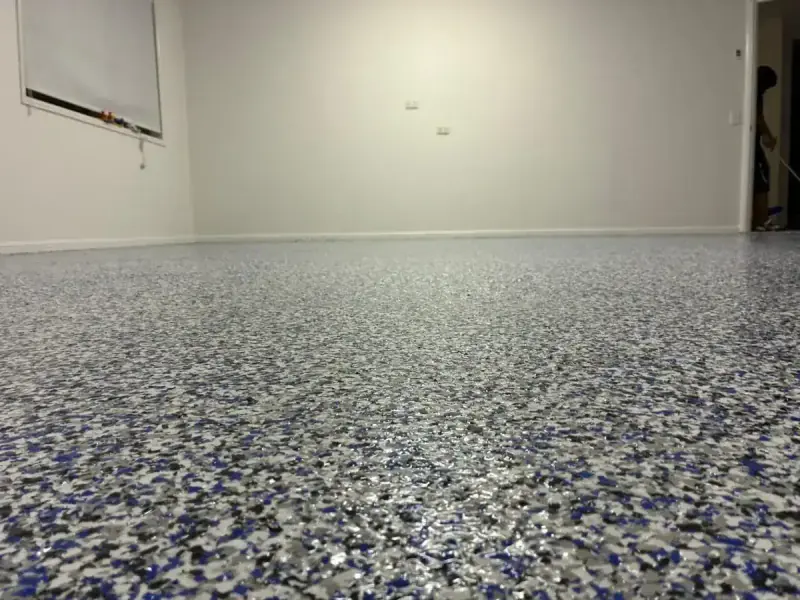
Structural Subfloor Leveling
Epoxy Crack Repair & Screed
We V-groove concrete slab cracks, inject high-strength structural epoxy compound, and pour self-leveling screed to restore subfloor flatness tolerance.
Surface Finish
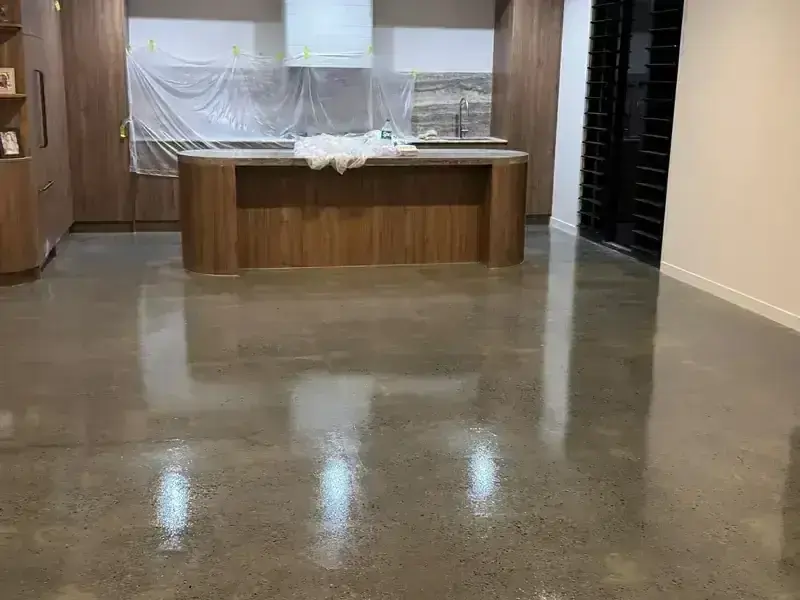
Diamond Polishing / Coating Application
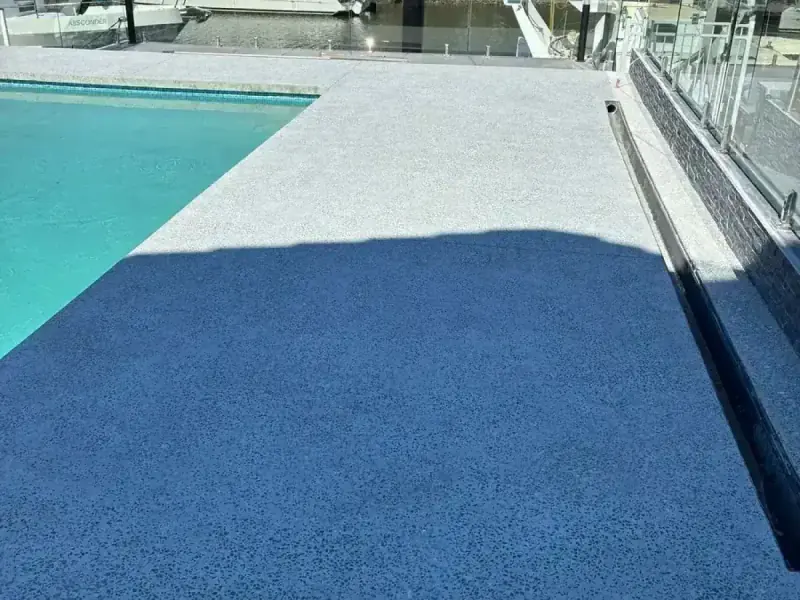
For polished concrete, we apply penetrating silicate densifiers and polish through fine diamond resin pads. For epoxy, we broadcast vinyl flakes and apply clear polyaspartic topcoat.
Final Site Cleanup
Quality Inspection & Handover
We remove all masking, vacuum the perimeter, test surface sheen, and walk you through the completed floor handover with simple care guidelines.
Standard Site Protocols and Dust Containment
Preparation is the single most critical factor in floor longevity. Whether stripping old tiles, grinding away contaminated glue, or mechanically polishing a concrete slab, our systematic 6-step approach ensures consistent results without cutting corners.
We maintain transparent communication at every stage of the project lifecycle. From the initial site inspection and moisture mapping through to grit progression, densification, and final protective sealing, our trade specialists ensure complete compliance with Australian Building Codes and manufacturer specifications. Our rigorous quality assurance protocols guarantee a stable, durable foundation that protects your investment for decades.
In-Situ Moisture Testing
We perform digital Tramex impedance scans and relative humidity (RH) probe testing in accordance with ASTM F2170. Testing slab moisture prior to any resin, coating, or floor covering installation eliminates blister and adhesive failure risks.
Negative Pressure HEPA Filtration
We connect all grinders and demo equipment directly to industrial pulse-jet extractors running certified H13 HEPA filters. Airborne crystalline silica is captured at the cutting edge, keeping living rooms, joinery, and adjacent tenancies clean.
Diamond Bond Metallurgy
Concrete hardness across Brisbane varies from soft 20 MPa residential slabs to rock-hard 50+ MPa post-tensioned commercial decks. We match diamond bond metallurgy (soft, medium, hard) to prevent diamond glazing or premature wheel wear.
AS 1884-2021 Flatness Handover
Every substrate is checked against a 3.0-metre calibrated straight-edge to ensure surface deviation is under 3mm. We provide complete sign-off documentation and care guidelines for tilers, vinyl layers, builders, and homeowners.
Frequently Asked Questions About Our Process
Clear answers to common questions about our machinery, dust extraction, slab testing, and preparation standards across South East Queensland.
How do you control silica dust inside occupied Brisbane homes?
Our grinding and tile demolition machinery connects directly to high-volume industrial extractors fitted with certified H13 HEPA micro-filters. These units run automatic pulse-jet filter purging to maintain maximum airflow at the cutting shroud. For residential renovations, we also erect temporary plastic zip-wall containment barriers across doorways and seal ducted return air vents, ensuring that fine respirable crystalline silica (RCS) dust cannot migrate into bedrooms, furniture, or living spaces.
Why is subfloor moisture testing required before laying hybrid or vinyl?
Concrete slabs in Brisbane and coastal Queensland absorb moisture from damp subgrades through capillary action. If an impermeable floor covering (such as hybrid planks, vinyl sheet, or epoxy resin) is applied over high-moisture concrete, hydrostatic vapour pressure forces moisture to the surface, dissolving adhesives and causing planks to buckle. In compliance with Australian Standard AS 1884-2021, we test slab relative humidity with digital in-situ probes and apply two-pack moisture-barrier epoxy membranes whenever readings exceed 75% RH.
What floor flatness standard do tilers and timber installers require?
Australian Standard AS 1884 specifies that concrete subfloors must have a flatness deviation of less than 3mm beneath a 3.0-metre straight-edge placed anywhere on the slab. High spots, concrete ridges, and curled slab joints will cause hollow sounds under tiles and seam separation in floating hybrid floors. Our heavy multi-head diamond grinders shave down crowns and high ridges, creating a laser-straight subfloor ready for direct adhesive bonding or underlay.
How do you remove old tile glue, carpet adhesive, and bitumen pitch?
Chemical strippers and solvent washes produce toxic fumes, saturate concrete pores with flammable residues, and often fail to dissolve aged adhesives. We employ polycrystalline diamond (PCD) scraper segments mounted to our heavy planetary grinding plates. These specialized diamond teeth mechanically peel away stubborn rubberized glue, ceramic thinset, and waterproof membranes back to pristine bare slab, leaving an open textured profile with zero chemical residue.
Ready for clean, professional floor preparation?
Tell us the suburb, the floor area and what you are after. We will come back with a clear, written quote.